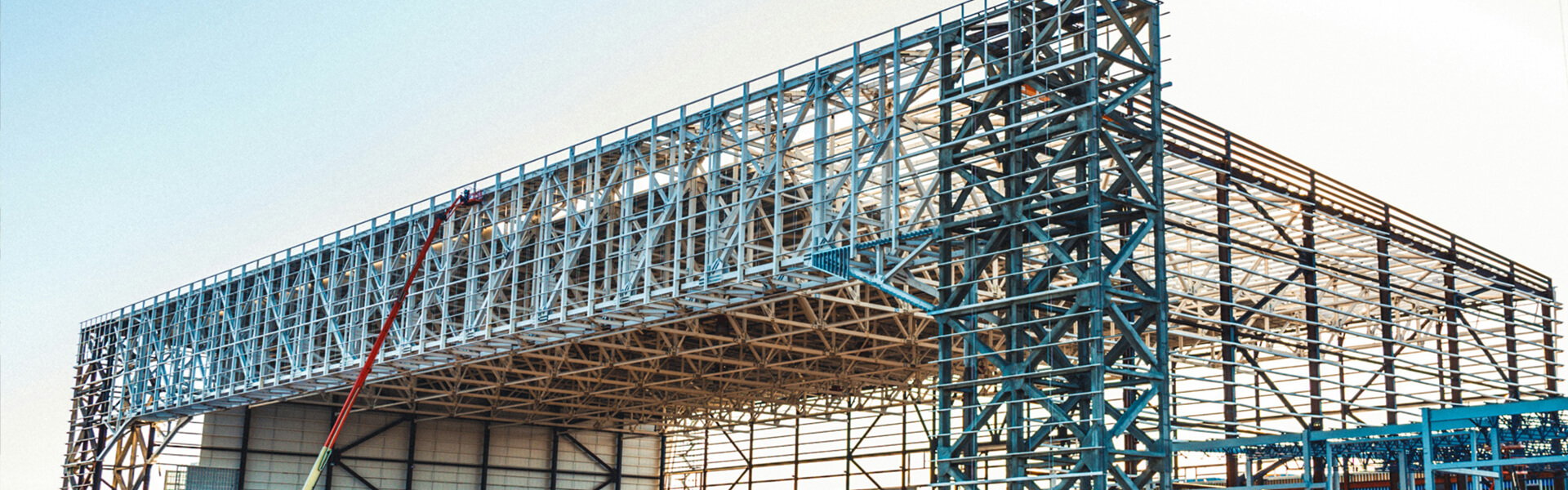
Pre-Engineered Buildings (PEBs) have transformed the way industrial, commercial, and large-span structures are designed and constructed. Unlike conventional construction methods, PEBs are engineered, fabricated, and manufactured using precision-designed steel components that are assembled efficiently at the project site.
These building systems offer an ideal combination of strength, speed, flexibility, and cost-effectiveness, making them a preferred choice for warehouses, manufacturing facilities, logistics parks, commercial buildings, aircraft hangars, agricultural structures, and infrastructure projects.
What is a Pre-Engineered Building?
A Pre-Engineered Building is a steel building system where structural components are designed and manufactured in a controlled factory environment before being transported to the construction site for installation.
Each component is engineered according to project-specific requirements such as:
- Building dimensions
- Wind load
- Seismic zone
- Roof slope
- Crane requirements
- Future expansion possibilities
- Building usage
Because every member is manufactured with precision, installation is faster and more efficient than traditional construction methods.
Main Components of a PEB
Primary Framing System
The primary framing system forms the structural backbone of the building. It consists of columns, rafters, rigid frames, and end frames designed to carry the building’s major structural loads.
Secondary Framing System
Secondary framing includes purlins, girts, eave struts, sag rods, and bracing members that support roof and wall cladding while improving structural stability.
Roofing & Cladding
Roof and wall systems protect the building against weather conditions while enhancing energy efficiency and aesthetics.
Common materials include:
- Colour-coated steel sheets
- Sandwich panels
- Insulated roofing systems
- Wall cladding panels
Building Accessories
Accessories improve functionality and include:
- Skylights
- Turbo ventilators
- Ridge ventilators
- Gutters
- Downpipes
- Flashings
- Doors
- Windows
- Louvers
Benefits of Pre-Engineered Buildings
Faster Construction
Factory fabrication allows simultaneous site preparation and component manufacturing, significantly reducing overall project timelines.
Cost Effective
Optimized structural design minimizes steel consumption and reduces labor costs during installation.
Superior Quality
Factory-controlled production ensures precision fabrication, consistent quality, and reliable structural performance.
Flexible Design
PEBs can be customized for different spans, heights, layouts, roof profiles, and future expansion requirements.
Low Maintenance
Protective coatings and quality steel components reduce maintenance while providing long service life.
Sustainable Construction
Steel is recyclable, and optimized designs reduce material wastage, making PEBs an environmentally responsible construction solution.
Applications of PEBs
Pre-Engineered Buildings are widely used in:
- Warehouses
- Manufacturing Plants
- Logistics Parks
- Industrial Buildings
- Commercial Buildings
- Food Processing Units
- Pharmaceutical Facilities
- Automobile Industries
- Cold Storage Facilities
- Aircraft Hangars
- Agricultural Buildings
- Sports Facilities
Typical PEB Construction Process
- Requirement Analysis
- Structural Design
- Engineering & Detailing
- Fabrication
- Quality Inspection
- Dispatch
- Site Erection
- Project Handover
Why Choose Sky Build Infratech?
At Sky Build Infratech, we provide complete PEB solutions covering design, engineering, manufacturing, supply, and erection. Our experienced team, modern fabrication facility, and commitment to quality enable us to deliver reliable steel building solutions tailored to each client’s requirements.
Frequently Asked Questions
What is the lifespan of a PEB?
With proper design, quality materials, and regular maintenance, a pre-engineered building can provide reliable performance for decades.
Are PEBs suitable for warehouses?
Yes. Warehouses are one of the most common applications because PEBs offer clear-span spaces, faster construction, and cost-effective solutions.
Can PEB buildings be expanded later?
Yes. One of the major advantages of PEB construction is the ability to accommodate future extensions with proper engineering.
Are PEBs environmentally friendly?
Yes. Steel is recyclable, and factory-controlled fabrication helps reduce material waste and improve construction efficiency.